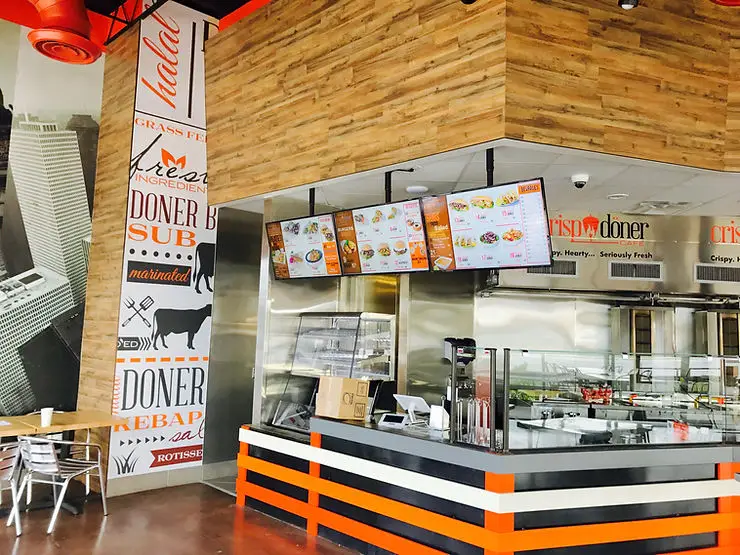
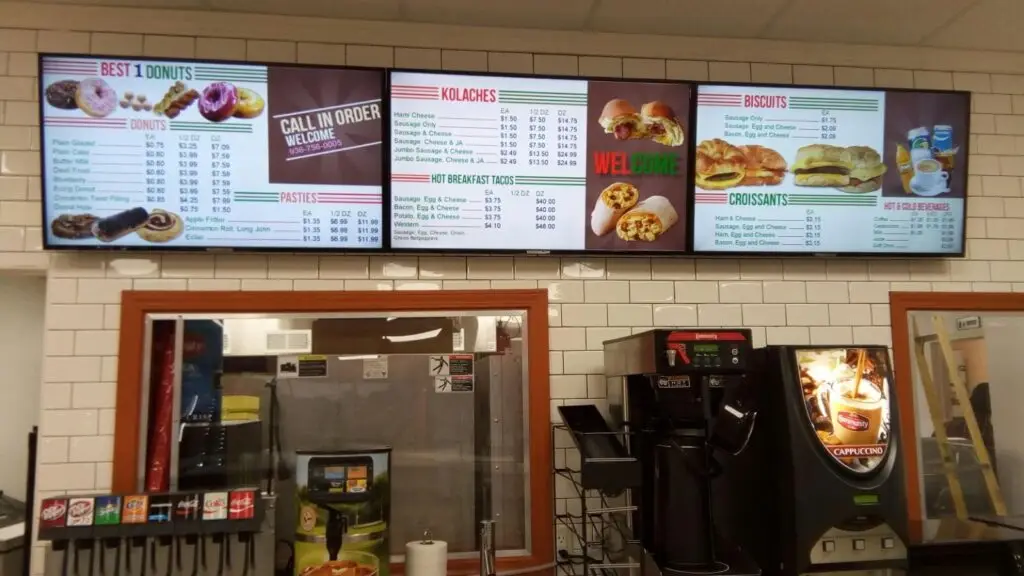
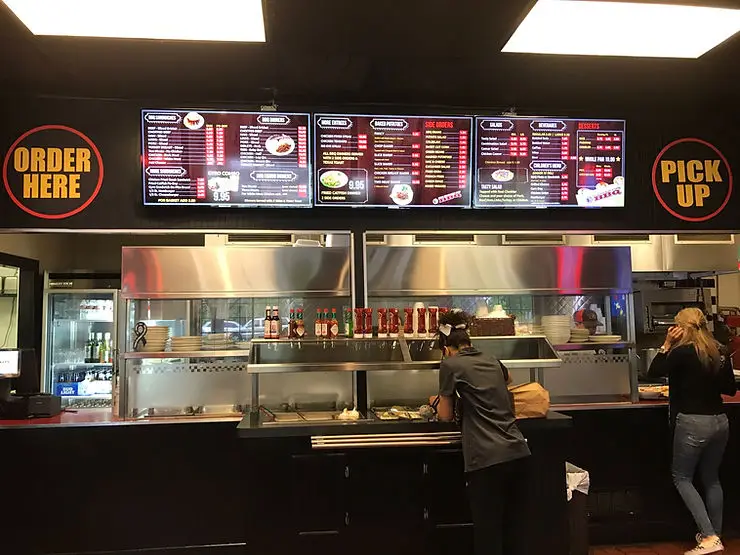
Digital menu boards can increase restaurant sales by making high-margin items, combos, limited-time offers, and add-ons more visible while allowing operators to change content by daypart, location, inventory, or promotion. Results vary by concept and execution, but published case studies show measurable gains in sales, average checks, beverages, and sides when digital menus boards are paired with effective menu strategy.
Key Takeaways
- Digital menu boards turn menu presentation into an adjustable sales channel rather than static signage.
- The biggest opportunities often come from upselling, combo attachment, limited-time offers, and daypart-specific merchandising.
- A 20-location fast-casual test reported a 1.5% overall sales lift, equivalent to about $24,000 annualized per store, with stronger gains in beverages and sides.
- Sonic reported that its digital menu board pilot increased average check compared with static boards and enabled daypart-based suggestive selling.
- Smart digital menu boards can go beyond scheduled playlists by incorporating real-time data, inventory, weather, traffic, loyalty information, sensors, or decision logic.
- Multi-location restaurants need centralized content management, location-level flexibility, reliable connectivity, and measurable KPIs.
- The goal should not be to make screens more complicated; it should be to make every menu impression more relevant.
What Are Digital Menu Boards for Restaurants?
Digital menu boards are electronic displays used to present restaurant menus, prices, promotions, product photography, combos, and other customer-facing information.
Unlike printed boards, they allow restaurant operators to update content without physically redesigning and replacing signage. For a single restaurant, that can make promotions easier to manage. For a multi-location brand, the operational advantage can be considerably greater because one content system can potentially coordinate changes across an entire network.
This is particularly valuable when different locations have different prices, regional products, promotions, operating hours, or inventory.
Houston Dynamic Displays positions its solution around restaurant-specific digital signage, with concepts covering QSRs, fast casual, full-service restaurants, pizza, coffee, doughnuts, and ice cream.
The important distinction is that a digital screen by itself does not automatically increase revenue. The commercial value comes from what the restaurant displays, when it displays it, how it is organized, and whether the results are measured.
How Digital Menu Boards Increase Restaurant Sales
1. They Give High-Margin Items More Visibility
A printed menu gives most items a relatively fixed amount of visual space. Digital menu boards allow restaurants to change that emphasis.
A restaurant can feature a profitable combo during lunch, promote a beverage during a slower afternoon period, or highlight a limited-time product during a campaign.
The objective is not simply to show more products. It is to direct attention toward the products the restaurant strategically wants customers to consider.
2. They Make Upselling More Consistent
Suggestive selling is much easier to standardize when it is built directly into the menu experience.
For example:
Burger → Combo → Premium Drink → Dessert
Instead of relying entirely on employees to remember every upsell prompt, the screen can visually present the next logical purchase.
This matters across multiple locations because the same upselling strategy can be deployed consistently while still allowing individual restaurants to make approved local adjustments.
3. They Support Daypart Marketing
Breakfast, lunch, dinner, late-night, and afternoon menus often have different purchasing patterns.
Digital menu boards restaurants use can automatically transition content according to scheduled dayparts. More advanced systems can also use contextual data to determine what should be displayed.
A coffee shop, for example, might emphasize:
Time | Promotional Focus |
|---|---|
Morning | Coffee + breakfast combo |
Late morning | Signature beverages |
Lunch | Meal combinations |
Afternoon | Snacks + cold drinks |
Evening | Desserts or dinner items |
This allows the menu to reflect what customers are most likely to purchase at a particular time.
4. They Make Limited-Time Offers Easier to Promote
Limited-time offers depend on visibility and timing.
With printed signage, launching a promotion across dozens of restaurants can require design, printing, shipping, installation, and removal. Digital systems can significantly simplify the content-change process.
That makes it easier for a restaurant group to test seasonal products, promotional bundles, new menu items, or regional campaigns without repeatedly redesigning physical signage.
5. They Can Respond to Real-Time Conditions
Advanced digital menu boards can become more than scheduled screens.
Smart systems can use factors such as weather, location, transaction history, traffic, sensors, and AI-driven decision logic to determine relevant content.
McDonald’s has also publicly described its use of decision technology to vary outdoor digital drive-thru menu displays according to factors including time of day, weather, restaurant traffic, and trending products, while suggesting additional items based on a customer’s current selection.
For restaurant operators, the lesson is simple: relevance can be a stronger sales lever than simply adding animation.
Real Data: What Do Digital Menu Boards Actually Deliver?
There is no universal sales percentage that every restaurant should expect. Results depend on menu design, restaurant format, location, pricing, customer behavior, content quality, and implementation.
However, published case studies provide useful evidence.
Fast-Casual Restaurant: 20-Location Test
Creative Realities reported a 12-week controlled test involving 20 locations of a national fast-casual restaurant brand. The project focused on improving average check size by encouraging beverage and side-item upsells while simplifying menu presentation.
The reported results included:
- 1.5% overall sales lift versus control locations
- Approximately $24,000 annualized sales lift per store
- 1.3% increase in à-la-carte sandwich sales
- 7.2% increase in fountain beverage sales
- 9.5% increase in sides
The study subsequently supported a nationwide rollout.
This case is particularly useful because it demonstrates an important point: the strongest opportunity may not come from increasing the sales of the main entrée. Improving attach rates for beverages and sides can also contribute meaningfully to revenue.
Sonic Drive-In: Digital Boards and Average Check
Sonic reported that testing digital menu boards produced an increase in average check compared with static boards. Its system also supported daypart changes and suggestive selling, including recommendations after customers placed orders.
The case demonstrates why digital menu boards can be particularly relevant to drive-thru restaurants: the screen becomes part of the ordering journey rather than merely a replacement for printed signage.
Vendor-Reported Industry Data
HD2Menus currently publishes figures attributed to a National Restaurant Association study, including claims around lower menu-change costs, increased high-margin and promotional-item sales, customer satisfaction, and investment payback.
These figures can be useful as directional industry information, but restaurant operators should not treat them as guaranteed outcomes. The strongest way to evaluate ROI is to measure performance against the restaurant’s own baseline and, where possible, a control group.
Digital Menu Boards vs. Traditional Printed Menus
Factor | Printed Menu Boards | Digital Menu Boards |
|---|---|---|
Price changes | Require physical updates | Can be updated digitally |
LTO campaigns | Slower to deploy | Fast content changes |
Daypart menus | Manual replacement | Scheduled |
Food photography | Limited by print layout | Dynamic visual presentation |
Multi-location control | More logistical work | Centralized management possible |
Inventory changes | Difficult to reflect immediately | Can be updated quickly |
A/B testing | Difficult | More practical |
Personalization | Limited | Possible with advanced systems |
Reporting | Minimal | Can be connected to measurable KPIs |
The advantage is therefore not simply that digital menus look modern. Their larger value is operational flexibility combined with merchandising control.
A Step-by-Step Strategy for Increasing Sales
Step 1: Establish a Baseline
Before installing or redesigning digital menu boards, record:
- Average order value
- Average check
- Item mix
- Beverage attachment rate
- Side attachment rate
- Dessert attachment rate
- Promotional-item sales
- Order accuracy
- Service time
Without a baseline, it is difficult to determine whether the investment actually improved performance.
Step 2: Identify Your Highest-Value Opportunities
Look for products with strong margins, low attachment rates, excess inventory, seasonal relevance, or strategic importance.
Do not automatically promote the most expensive product. Promote the product that makes commercial sense for the specific business objective.
Step 3: Build a Clear Menu Hierarchy
Customers should be able to understand the menu quickly.
Use:
- Strong category organization
- Clear pricing
- High-quality food photography
- Limited featured items
- Short descriptions
- Obvious combo relationships
- Consistent branding
Avoid filling every screen with competing messages.
Step 4: Create Daypart Playlists
Build separate content for breakfast, lunch, afternoon, dinner, and late-night periods where appropriate.
Automating these transitions reduces the risk of displaying the wrong offer at the wrong time.
Step 5: Add Suggestive Selling
Use prompts such as:
- “Make it a combo”
- “Add a drink”
- “Complete your meal”
- “Try our limited-time flavor”
- “Popular choice”
The message should feel useful rather than aggressive.
Step 6: Test One Variable at a Time
Try changing:
- Product position
- Photography
- Combo presentation
- Call-to-action
- Promotional message
- Add-on placement
Then compare the results.
A digital menu should be treated as an ongoing optimization channel, not a one-time design project.
Best Practices for Multi-Location Restaurants
For restaurant groups, consistency and flexibility need to work together.
A strong digital menu strategy should provide:
Central control for corporate-approved branding and campaigns.
Location-level flexibility for approved local pricing and availability.
Daypart automation for time-sensitive menus.
Reliable content delivery across different network environments.
Permission controls so unauthorized changes are avoided.
A content approval process before major campaigns go live.
Performance reporting tied to actual restaurant KPIs.
For large restaurant networks, important considerations include scale, network differences, location-level menu variation, POS integration, support, and future expansion.
Common Digital Menu Board Mistakes
Too Much Content
More information does not necessarily mean better communication. Overcrowded screens can make decision-making harder.
Promoting Everything
If every item is labeled “special,” nothing stands out. Establish a clear promotional hierarchy.
Ignoring Menu Engineering
Beautiful food photography cannot compensate for poor product placement or an ineffective offer strategy.
Forgetting Location Differences
A national campaign may not work equally well in every market. Local pricing, availability, customer preferences, and regulations can differ.
Failing to Measure Results
A restaurant should know whether its screens are improving average check, attachment rates, promotional sales, or another defined KPI.
Treating Hardware as the Strategy
The display is only one component. Content, software, integrations, network reliability, analytics, and ongoing optimization determine how useful the system becomes.
Expert Tips for Increasing Digital Menu ROI
Lead with the commercial objective. Decide whether the campaign is intended to increase average check, sell a particular product, improve attachment, promote an LTO, or simplify ordering.
Use real restaurant data. If beverage attachment is weak, build campaigns around beverages rather than guessing what customers need.
Design for speed. Customers should understand the most important options quickly.
Use photography strategically. One strong product image can communicate more effectively than several paragraphs of description.
Create modular templates. Multi-location operators can maintain brand consistency while swapping products, prices, images, and promotions.
Build a testing culture. Even small changes can be evaluated when POS data is available.
Why Digital Menu Boards Matter Even More at Scale
For a single restaurant, changing a printed menu is an inconvenience. For a 50-, 100-, or 500-location restaurant group, it becomes an operational process.
Digital menu boards restaurants can use across multiple sites allow corporate teams to establish a common visual and promotional framework while giving individual locations appropriate flexibility.
The technology also creates a foundation for future capabilities. Smart menu systems can connect with POS data, loyalty programs, inventory information, sensors, and decision engines. This evolution moves digital signage from basic scheduled content toward responsive, data-driven customer communication.
For multi-location operators, that scalability can be one of the most important benefits.
Conclusion: Turn Your Menu Board Into a Measurable Sales Tool
Digital menu boards can do much more than replace printed signage. When properly designed and managed, they give restaurants a flexible way to merchandise high-margin products, promote combos, support upselling, launch limited-time offers, adapt menus by daypart, and maintain consistency across multiple locations.
The real opportunity is not simply putting a screen above the counter. It is creating a data-informed menu strategy and continuously measuring whether that strategy improves the metrics that matter.
Houston Dynamic Displays helps restaurants implement digital signage solutions designed around real restaurant environments and different concepts, from QSR and fast casual to pizza, coffee, doughnut, ice cream, and full-service operations.
If you are ready to evaluate how digital menu boards could support your restaurant’s sales and operational goals, contact us today to discuss your locations, menu strategy, and digital display requirements.
Frequently Asked Questions
They can, but there is no guaranteed percentage. Published case studies have reported measurable improvements in sales, average checks, beverages, sides, and promotional performance. For example, Creative Realities reported a 1.5% sales lift in a 20-location fast-casual test, with stronger increases in beverages and sides.
They can increase average order value by giving greater visibility to combos, premium options, beverages, sides, desserts, and other add-ons. Digital displays also make it easier to change the upsell message according to the time of day or customer context.
Yes. One of their major advantages is centralized content management. Restaurant groups can coordinate branding and promotions across locations while allowing approved differences in pricing, products, and local campaigns.
Some digital menu platforms can integrate with POS systems and other restaurant technologies. Integration capabilities vary by provider, so restaurant operators should confirm which POS platforms, APIs, inventory systems, and data sources are supported before selecting a solution.
There is no universal schedule. Daypart content may change several times a day, while core menu content may remain stable. Seasonal promotions, LTOs, pricing, inventory, and performance data should determine when updates are appropriate.